
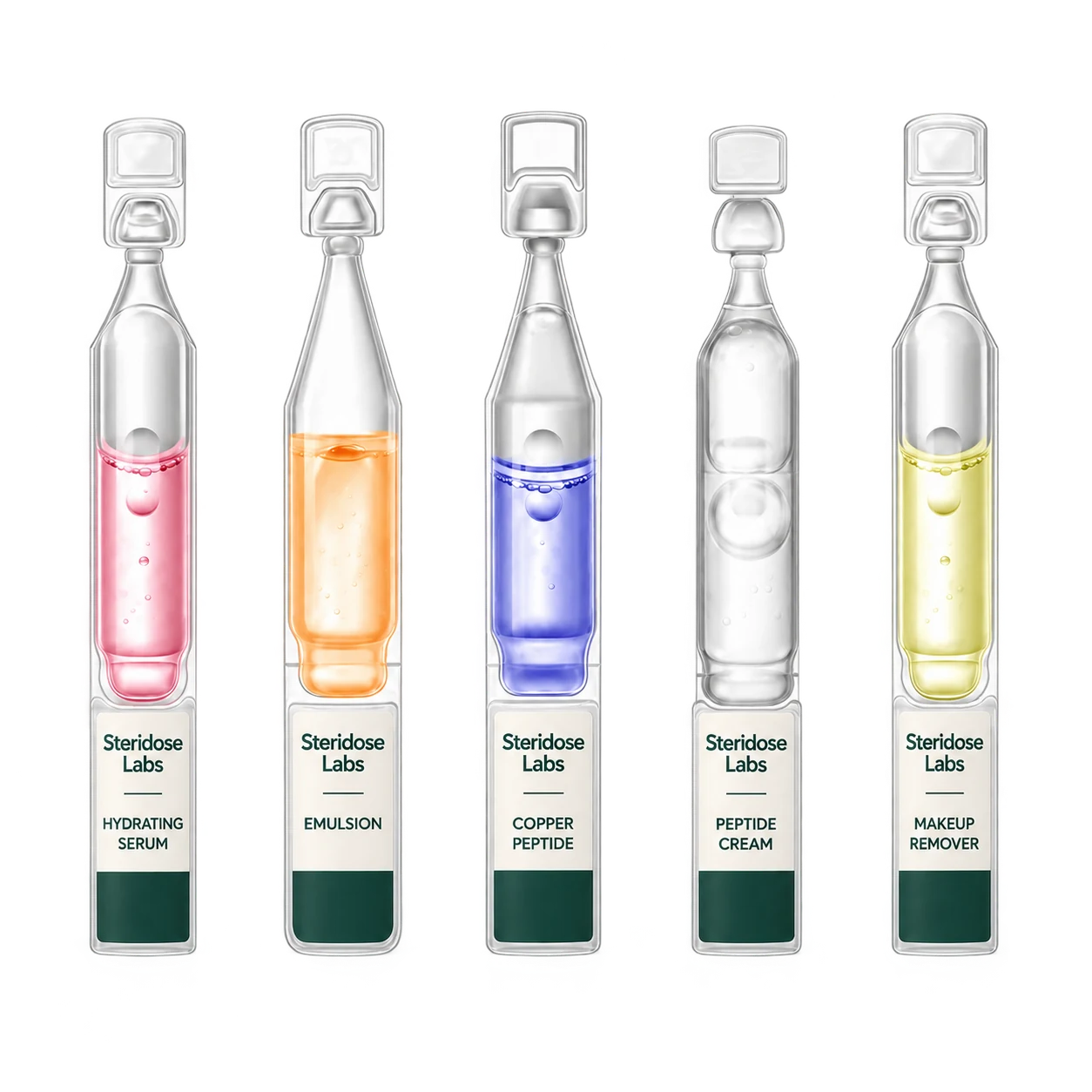
Travel-size serum packaging is often the first search path for a skincare brand that wants a small-dose format but does not yet know whether BFS ampoules, sachets, mini bottles or vials are the right route. Your team may search for travel-size serum, mini skincare set, serum sample packaging or single-use serum before learning the technical phrase BFS ampoule.
That search behavior matters. If a supplier only talks about BFS technology, it may miss brands that are already commercially ready but still describe the problem in customer language. A brand may want a 7-day serum routine, a weekend travel set, a discovery box, a GWP insert or a creator seeding sample. All of those projects can start from the same question: what small-dose format makes the first use feel clear, premium and easy to judge?
The commercial question is usually simple: can the brand give buyers a premium first-use experience without committing immediately to a full retail bottle or a large inventory position? Travel-size formats are often used before a main launch, during a retail sampling campaign, for a spa or clinic handoff, or as a channel-exclusive mini SKU. The right package should make the sample feel intentional rather than leftover.
Single-dose ampoules can be useful when the travel format needs a clear routine, compact secondary packaging, lower mess in transit and a more controlled first-use impression. Compared with sachets, an ampoule can feel more premium and easier to dose. Compared with mini bottles, it can reduce the need for caps, pumps or droppers. Compared with glass ampoules, polymer formats can be lighter, less fragile and easier to place in travel or GWP kits.
The strongest travel-size serum projects usually have a defined use case. Examples include a 3-step glow routine, a 7-count serum kit, a 10-count discovery set, a distributor sample pack, a creator seeding mailer, a hotel or travel retail insert, a clinic/spa professional skincare sample or a private-label starter kit. When the use case is clear, the packaging discussion becomes practical: fill volume, unit count, strip format, opening experience, carton style and launch quantity.
0.5ml–20ml small-dose skincare liquid projects, depending on format and use case. BFS ampoule projects are typically reviewed around 0.5ml–10ml, while larger or special formats should be evaluated separately. The goal is not to force every product into one format. The goal is to match the formula, usage occasion and channel plan with the smallest reliable pilot path.
A pilot does not need to replace the main packaging line. For many brands, the best first step is to test one travel-size concept while the full-size product remains unchanged. A brand can compare a 7-day serum kit against sachets, test whether a creator seeding box creates better feedback, or use a GWP pack to learn whether the audience understands the formula before expanding into a larger retail program.
Before quotation, your team should prepare the formula status, target fill volume, desired unit count, carton or tray idea, channel use case, first pilot quantity and the commercial question the pilot needs to answer. If the brand is still comparing formats, the brief can start with the current package and the problem: too much leakage, weak premium feel, poor sample conversion, difficult staff handoff or low repeat intent.
A useful pilot review should answer four things. First, whether the formula can be reviewed for the target small-dose route. Second, whether the fill volume and package shape make sense for the routine. Third, whether the secondary packaging can communicate the travel or discovery concept. Fourth, whether the pilot quantity is enough to collect meaningful feedback from the intended channel.
Travel-size serum packaging is usually strongest when the product has a clear use occasion. It may be a travel routine, a first-purchase sample, a hotel or spa handoff, a distributor trial pack, a beauty discovery set or a GWP insert. It is usually weaker when the project only wants the lowest-cost giveaway and has no plan for measuring repeat interest, channel feedback or conversion.
Brands should also decide whether the travel-size unit is meant to educate, sell or validate. An education kit may need clearer instructions and routine sequence. A selling kit may need stronger retail presentation. A validation kit may need better feedback tracking and enough units to compare audiences. The package can be similar, but the success metric changes.
Standard BFS commercial pilot production usually starts from 10,000+ units. A 5,000-unit BFS run is not currently confirmed; written factory approval is required before it can be quoted. For searchers comparing travel-size serum packaging, the best next step is not a generic packaging quote. It is a format-fit review that connects the formula, volume, kit structure, target audience and scale-up path.
Ready to Move This Topic Into Execution?
Use one primary path and one backup path so decision-making stays clear.