
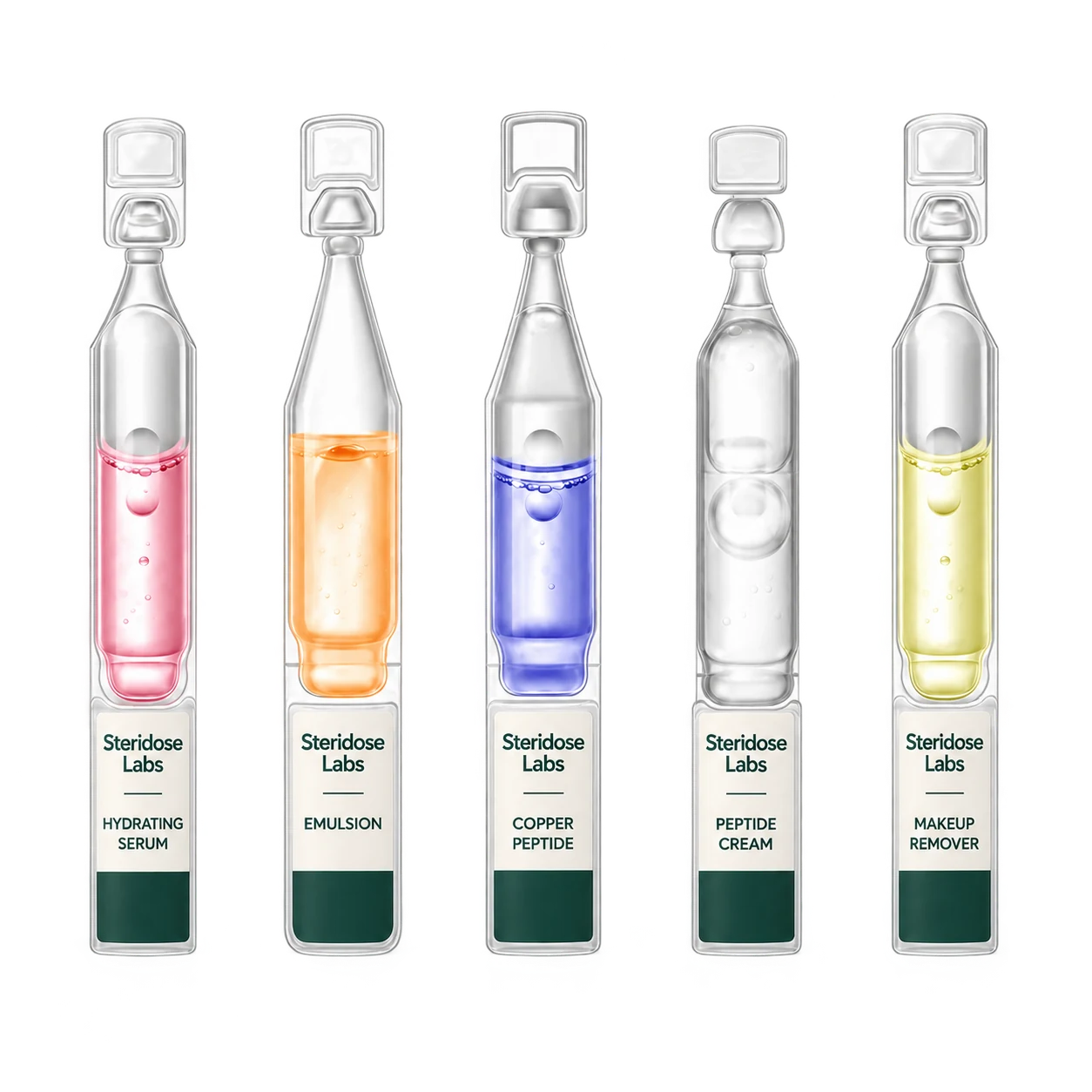
PDRN and sodium DNA water-light serum concepts are a useful example of why small-dose packaging should start from the launch use case, not only the formula name.
A brand may want to test whether buyers understand the ingredient story, whether the texture feels premium, and whether a single-use format improves the first trial experience. That is different from immediately committing to a full retail bottle or a large production run.
For a PDRN-style cosmetic serum concept, small-dose packaging can be reviewed by launch use case. 0.5ml–20ml small-dose skincare liquid projects, depending on format and use case. BFS ampoule projects are typically reviewed around 0.5ml–10ml, while larger or special formats should be evaluated separately.
The pilot does not need to replace the main packaging line. It can test one commercial question first: will a 7-day water-light serum discovery kit, a GWP insert, a clinic/spa sample handoff or a private-label trial set create enough buyer feedback to justify scale-up?
This is also where formula and packaging teams should work together early. Your team should prepare the target fill volume, liquid behavior, sensory direction, packaging route, unit count, secondary pack idea and sales channel before requesting quotation.
Standard BFS commercial pilot production usually starts from 10,000+ units. A 5,000-unit BFS run is not currently confirmed; written factory approval is required before it can be quoted.
The safest way to frame this publicly is as cosmetic serum sampling and pilot packaging. Keep the claim language cosmetic, channel-focused and buyer-review oriented, with emphasis on formula compatibility, packaging experience and market-test logic.
Ready to Move This Topic Into Execution?
Use one primary path and one backup path so decision-making stays clear.